One reasonable way
to weigh God’s Creation
is to stand at night
in open space
and look upwards.
Infinite dark
vastness beyond measure
made
effectively
of nothing.
Scattered like dust
through this archway of nothing
you see pin-points of light
called stars.
But these, you learn,
although substantive,
are also dead,
truly of dust,
just nothing
made differently.
Keep looking.
It is a study in motion
of nothing to infinity
interspersed
by dots of nothing.
Keep looking.
When in the beginning
God made the Word
he made it momentary. The silence He made
is infinite
and lasts for all time.
Rogan Wolf, January 18th 2018
Posted:
Poetry once belonged only in open space – the mead hall by a great fire, where flea-bitten warriors sat at table with their lord ; or a place of worship or ceremony, the wedding, the funeral. Not in private, on paper, let alone on screen. Poetry belonged in the air between people, out loud.
Accordingly, the poet had a recognised place and status in the community as witness, custodian and celebrant of that community’s particular life and history. And the poet’s words were public words. They hung in the air. They were hung on to.
For poet and community were at one in their belief that true witness requires a language that activates both sides of the brain, not just the side that measures, tots up and chases material profit.
But then the invention of printing came along and played a large part in curtailing the public delivery of poetic language, delivering it instead to the private page and eventually to the side-lines, even while many of us find more and more that our experience of reality is left incomplete if all our talk is of quantity without quality, sell and spin without I – Thou.
The project “Poems for…the wall”
For the last twenty years, I have run the project “Poems for…the wall.” It is a way of restoring poetry to public space.
Its latest two collections attempt to bring to life and reality what it means to have either a mental health problem or a learning disability. The poems are not sentimental, nor do they under-estimate the issues. They don’t reduce the subject to slogans or figures or a list of research findings or otherwise trivialise or neutralise it. They do what poetry can do, offering human connection and comprehension.
I am hoping the collections will be used in schools and universities to address issues of stigma and isolation, and to make both topics addressed easier to talk about openly and with closer knowledge.
But while I am excited by what these latest collections might be able to do, I am equally sure that the Project’s earlier bilingual collections have a scope and application not yet fully realized or exploited, even now.
Intolerance and various forms of demonisation of the stranger and outsider are returning and increasing all over the world, to a horrendous and murderous degree, even while the same world has become irrecoverably and necessarily more and more inter-dependent and inter-connected.
In consequence, extraordinary contradictions abound. For example, we have unworthy politicians in many countries (including the UK, of course) winning votes for their regressive, even medieval notions of chauvinism and separatism, making more and more streets unsafe again, while at the same time young people from every continent in the world are coming together in school after school, university after university, country after country. Borders become walls and battlements even while universities inland become international centres, concentrations of global interchange, a bit like space stations shining in the growing dark.
In all this bewilderment, poems that build bridges surely have a part to play, perhaps as never before.
So much of our public language merely alienates people, even while they briefly and partly listen and read. In contrast, I believe public poetry of good enough quality can work the other way and help to oppose the forces of fragmentation and severance and withdrawal. The bilingual poems available on the site of “Poems for…the wall” can “open people’s lives to one another” – (David Hart, poet).
Graphically and often beautifully, the bilingual poems celebrate our enormous differences – of language, of text, even of reading direction – and at the same time reveal and demonstrate, often with great penetration, our commonality. They offer an electric connection across space.
And people from a different background, whose mother tongue is not English, people perhaps struggling to integrate in the host country and institution, dealing with this incomprehensible delay, that clumsy requirement, can feel very different if they see their own language being celebrated on the wall here. Their presence is being acknowledged, even as their language and culture is being valued.
And for employees, poems displayed out in the open can give the eye something to rest on – between or even during phone calls, messages, classes. They can speak to a part of the Self kept otherwise submerged in the day’s rush and demands and anxieties. Suddenly, words in front of you can open up a whole different space of quietness and outlook and inlook.
Where in Public Space might Poems Belong ?
You can display the poems in imaginative ways. In most cases, it helps to keep changing them, so that people keep looking in their direction.
They can speak eloquently in a wide range of places : in reception areas or class rooms or waiting rooms, writ large ; or in quiet corners on a small scale – outside lifts, on desks, above the photostat machine, on toilet doors, in X-ray cubicles….
And people have found many different ways to display them : in A4 perspex stand-alone frames ; in perspex holders fixed to the wall ; in ordinary picture frames, designed to make it easy for poems to be replaced ; in ring-binder files, left on tables ; on plasma display screens as a rotating slideshow.
An enthusiast is needed on site to place the poems sensitively and keep rotating them, etc etc. Someone just doing it as a requirement from on high won’t give to the task the necessary flair or conscientiousness.
Poetry readings for university staff and students and others.
Here I am still talking about “public” poetry, but not in terms of the “Poems for…the wall” project and its poster-poems. This is about me as an individual poet and a retired mental-health social worker.
I think a lot about “fraught frontiers” and want to read my own poetry to people who are “stationed” there.
What do I mean by “fraught frontiers ?” I mean positions and roles and activities where it’s often hard to make I – Thou connection and keep integrity, where staying whole and reaching out can be taxing and problematic, and retreating into one or another simplistic black-and white position an almost overwhelming temptation.
If TS Eliot is right that “humankind cannot bear very much reality” (and it is all too clear that he is) then a fraught frontier is a place where reality presses very close and perhaps uncomfortable and identity is threatened. Consequently, brute behaviour can raise its head there.
The historian Hugh Trevor Roper established that in times and countries in which witchcraft was accepted as a possible explanation for misfortune, an uncertain frontier (in a geographical sense) was a dangerous place for a woman to keep house, especially if she was unusual in any way.
A community under pressure might turn on her at any time, suspecting her of being the cause of their trouble and uncertainty. She would be accused of witchcraft, bringing harm to the community through casting evil spells on its people. A whole pseudo-legal process would then be set in motion, in which she might be tortured and burnt to death as a kind of exorcism. Did conditions in the community now take a turn for the better ? No, of course not. But for centuries, a belief in witchcraft persisted.
In other words, fraught frontiers (both geographical and psychological) can be places of fear and anxiety, delusion and scapegoating. In times and places of uncertainty, the outsider can become fair game. In times and places of uncertainty, it is that much harder to lead a full, rich, unguarded and generous life.
I think that the wonderful late David Jenkins, ex-Bishop of Durham, would have known very well what I mean and he put it better than I can in a speech he gave to social workers in 1988. Not exactly, but very nearly, his “pressure points” correspond to my “fraught frontiers.” Here he is : “[You] are a group of people who are being called upon to live dangerously at many of the pressure points in our present confused, confusing and increasingly divided society. As such you are the objects of, and therefore presumably in your own persons and reflections the subjects of, a great deal of confusion, anxiety and uncertainty. Your position is highly ambivalent and ambiguous and therefore both actually painful now and potentially promising with regard to the future of our society and, indeed, of human beings on this earth.”
In various ways and settings, it can be said that poetry has been making a “come-back” in recent years. Performance poets have become quite common, for example, often borrowing from rap styles. “Open Mike” events are well attended.
In other ways, though, poetry remains as much a minority activity as ever, a private individual interest, a purely literary activity for a few literary types, something that a few people study at university before getting down to living. And for most people, that “living” barely includes poetry at all – except perhaps when there’s a funeral…
Personally, I think poetry can open up parts of the self that modern life tends to lock out and deny ; and it can and should reach out to everyone, and not just to literary types. Above all, I think it can remind people of their own imaginative selves, their inwardness, and it can help sustain people whose work requires them to be imaginative and open, and in accord with the spiritual aspect of their lives.
So for me, a poetry reading is not a discrete literary event for literary types. It is a reaching out to people at the work-face, in the thick of things, at the fraught frontier. It offers quietness, “mindfulness,” insight and connection. It can open doors into rooms of people’s experience which they have forgotten existed. It can illuminate and validate and touch. It can re-order, refresh and re-orientate. It can remind people of what is true and whole.
Posted:

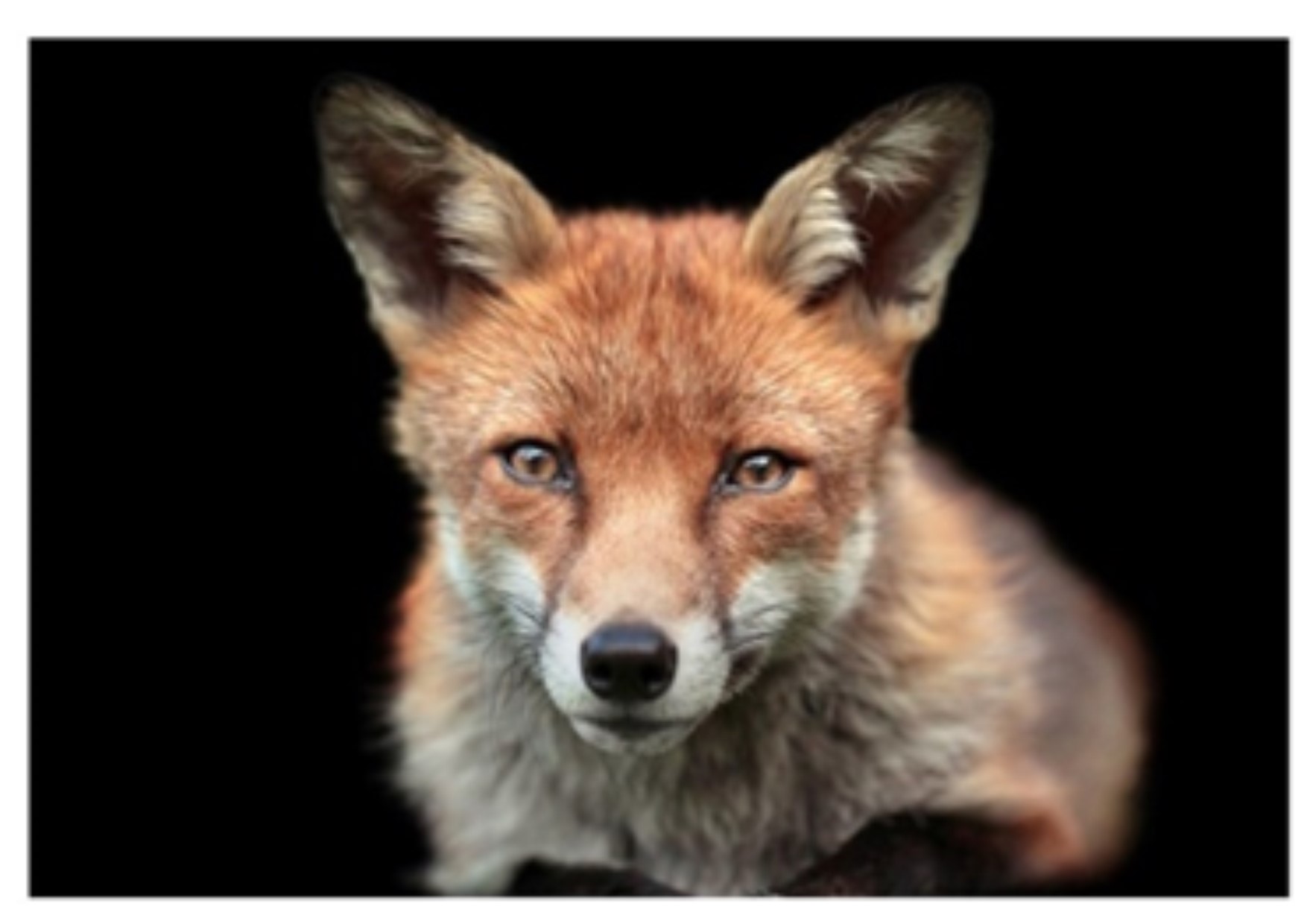
When Theresa May, the UK’s Conservative Prime Minister, called an election for June 2017, her manifesto included an opportunity to repeal New Labour’s ban on fox hunting. The Conservatives had expected to increase their majority, which would have eased May’s ability to push through Brexit. Instead they lost it.
I came running. I’d heard
them earlier of course
the bugles, the hounds, the quads
and all the tall king’s horses.
But now, suddenly,
here they were
yards away
in the public park where lovers meet
and our children play.
And I arrived at that precise moment
everyone talks about
when the fox stands
at the last of itself
its lust and pride all used up
and now there is nothing
but fangs to undergo.
And the hounds crouch
back on their haunches
and just before they leap in
for gut and muscle
to rend and rip and nullify
they cease for a moment
their frenzy of sound.
And a few riders, having
just caught up, they
also pause and you can see
tongue slide along lip
and eye glitter in the wet
and silent ecstasy of this moment.
And suddenly I knew that here at last
we had come full
circle and stopped
and as a planet might stop
but then perforce will roll
backwards onto itself,
our nation had taken
back control.
Rogan Wolf
(the picture of the fox above has been taken from the website of the League against Cruel Sports. See : https://www.league.org.uk/fox-hunting)
Posted:

The collage of photographs above records a small exhibition of bilingual poem-posters that has recently been showing in a popular public setting managed by Bristol University. The poems were selected from “Poems for the Wall,” a project I founded almost exactly twenty years ago, and still run. The exhibition went up under the stewardship of the university’s Bristol Poetry Institute.
Half way up the collage, towards the left, you can see a background photograph of all the poems together displayed on the wall. Four of them are printed on paperboard at A3 size, the rest on card at A4 size.
Look carefully at the group picture and you’ll see that every small poster has two passages of text on it, printed alongside and opposite each other. In each case, one passage of text is the original poem composed in a non-English language ; the other is its English translation.
It’s as if there is a conversation going on in each poster. Or exploration.
For information, there are ten different languages represented in the group picture : Arabic, Dutch, Greek, Hebrew, Hungarian, Japanese, Latin, Mandarin, Punjabi, Tigrinyi.
Five times that number are represented in the project’s collection as a whole, comprising over 200 poems. You can find all them on the project’s website https://poemsforthewall.org and can download them free of charge.
I have been able to enlarge five of the languages for the collage above : Arabic, Hebrew, Japanese and two ages of Mandarin. One of the Mandarin pair – by Gu Cheng – was written approximately a thousand years after the other – by Li Bai. And the poem by Li Bai was almost certainly painted, not written.
And when Li Bai positioned his letters, he started at the top and from the right and his eye ran downwards and leftwards. By the time Gu Cheng was writing, a thousand years later, he saw his writing in the same way as the western – horizontally and from left to right.
And for those Westerners who don’t know, please note that the Arabic and the Hebrew you can see in the picture above here are both written and read from the right.
The poet David Hart once said of the “Poems for the wall” project : “we have the chance here to open people’s lives to each other.”
Posted:
The poem I’m publishing here foresees the end of the world. The false god Me n’ Mine has too many worshippers to be withstood. Besides Greed, the angel which serves Me n’ Mine most faithfully is the Lie and it is the Lie by which the false god rules and will destroy us all.
In the beginning was the Word.
Conceived by light
and the power of human brain
it traced the flight of breath
and through the soft and wondrous delicacy
of throat and tongue and lip
became sound and meaning.
And the Word was with God
and the Word was God
and the same was in the beginning
with God.
But an instant after the Beginning,
unseen by God,
the Lie
stole into the garden
like a shadow
the shadow of the Word
and slid between the fact and the fear,
between the wonder of I and all that’s outside of Me,
and its tongue was forked and all a-flicker
and its eyes were cold and alert.
Nah then, the Lie whispered,
What gives ‘ere ?
And there were gods in the garden, many gods –
the true, the One, the one true God –
and the many that were false.
Nah then, said the Lie.
I need some living space.
To whose temple shall I offer my support
in return for my breakfast
my “daily bread” ?
And God the One, the only true,
Creation itself, Alpha, Omega,
the Creator of Matter, the Fact of Matter
the Matter of Fact and Reality,
made no answer to the Lie’s deliberations
and merely wept.
And all along the Lie knew
its way to go and where to rest
and slid by devious means
to the gold-clad tower of a deadly
god of human sacrifice
called Me ‘n Mine.
I shall place myself
at your service, O mighty
Me ‘n Mine and help you claim
the garden for your purposes,
your jealousies and terrors
your hatreds and your pride.
I shall help you in this great work
of poison and pollution, ruin and degradation,
in return for a daily spot of breakfast –
and let me add that more than a spot –
a “full English” you might say –
would encourage my loyalty still further
to the point
of not infrequent overtime.
They sealed their pact, recognizing
the blood-tie. And the Lie became an angel
in the service of Me ‘n Mine, a foul demi-god
with gold-lacquered wings and that familiar forked tongue,
an angelised recruiting agent
an evangelist , a soul-stealer, a maker of creatures,
creatures in thrall to Me ‘n Mine
creatures of the Lie.
And following the customs of Middle Earth
where Good meets Evil, light meets dark,
they gave these captive creatures
the name “orc”
which, when registered
and beamed onto a screen
is always twinned with a virtual dot.
Thus : Joe Bloggs.orc
means we got ‘im
we stole the soul of that Joe Bloggs
and another one bites the dust.
And our garden once so fruitful
turns to wasteland ever more swiftly
as another one bites the dust
to the glory of Me ‘n Mine
to the glory of the Lie
and another one bites the dust…
So let us review
a few of these dot orcs
in their robot squadrons,
these creatures of Me ‘n Mine.
Let them engage in a short march-past
eyes right and glassily alert,
clutching to themselves
at an angle of sameness that spans the world
their dread weaponry of the Lie.
And of course there’s Trump.orc
Or Drumpf, or Tromb, or Dromb,
or drum or tomb or bomb.orc
dealer in dust, in money, in lies,
who favours towers which flag his name
and feudal walls of delusion and fear,
walls that divide and also confuse
fact with fantasy and truth with lie.
Where there are tired, poor and huddled masses
there we find Trump.orc,
strutting and twittering, making hay
and puerile scenes of fire and smoke.
Not America great again.
Each breath he breathes
America falls further from esteem
and becomes a fearsome joke.
But let us look eastward now to find
a lesser though similar joke.
Please regard the Maybot.orc
parading down the street
weak and utterly unstable
on a pretend chariot of painted gold
drawn by three dementing daleks.
And Brexit means Brexit
and nothing has changed
and red white and blue
and stuff you, you and you.
But in fact and truth, that chariot
is a vast and noisome bubble of fart
produced last year
by half the UK population
who felt let down and counted out
following years of belittlement,
“austerity,” unworthy leadership
and then a foul feast of lies
dished up by orcish fanatics trained in deceit
and a venomous chorus of dot orc billionaires.
It was a fart
swiftly trapped by liars
and forced into a cart-shape
and then wrapped in a flag
to make it look like a decision.
And the EU was not what it meant.
It was not the EU at all.
The EU was not it at all.
But Maybot.orc, seized that moment
of national distress and manifest need
and made it hers:
“The People have spoken ” she lied
in a hushed and reverential tone.
But it wasn’t the People she revered.
Maybot.orc is a pious devotee
of dust and Me n’ Mine.
“Listen to me,” she cried.
“It is I, the Maybot, who speak.
Here on this fart disguised as a chariot
I have come into my own.
And I shall bring global glory
to my fraught, distraught and tiny island
and I shall have control.
And I shall spray that dark tower
at the heart of Kensington
in a golden dust of denial. And I
shall bring back foxhunting,
grammar schools, aircraft carriers,
bows, arrows and the battle of Agincourt.
I shall bring back everything
and everything I restore
I shall cover in a golden dust cloud
of lie and denial. So let us now praise
the Lie and reward all liars
with tax relief and an OBE.
For principle, competence and honour are dead.
Me ‘n Mine is all that matters in the world.
Play that again, Sam. Mine and me.”
And in Maybot’s noisome train, we must pay
a moment’s attention to BoJo.orc
as he stumbles and fumbles along,
our Bullington Braveheart of the lie.
BoJo.orc makes jolly funny jokes
in Latin and loves it when we look at him
but if in some Etonian classroom
he once was taught to tell the truth
he forgot that lesson ages back.
Bully bully bully, mutters Bojo.orc
let Maybot just try to give me the sack.
And look, there’s Gove.orc
skipping about on the Maybot fart
waging war on the “Blob”, our teachers,
wielding his long knives, that clever man
wearing the livery of the Lord of Murdor
and those other billionaire barons
who’ve fought these many years
to make this country mean again,
in thrall to Me n’Mine.
Oh those billionaire barons, those global brothers in arms.
They devote their lives to helping each other
keep their fortress walls intact
and a clean and peaceful community at bay.
With their long knives out
the barons range the public highway
scattering gold dust, meat and wine
on any procession around the world
that marches for Me n’ Mine.
In the beginning was the Word
and the word was the silence of God
and an outcast child
asleep in a stable.
And the end when it comes
will be the triumph of the Lie
that pours like dust
from the jaws of Me’ n Mine.
We shall end in flames
in darkness and in disgrace
not with a bang
but a dust-filled whimper.
Rogan Wolf, November 12th 2017
Posted:
Let’s look again at St Aldhelm’s chapel, a small square Norman building on a cliff-edge. It stands at the very tip of a promontory on the Dorset coast called – a bit confusingly – St Alban’s Head.
The chapel is small and dark and inside it is very damp. This is because the door into it is always open and of course the sea is close, down below. Also there is no electricity to the place, so never any artificial light or heat.
I have given poetry readings in the chapel at various times in my life, to small gatherings of people sitting on the rather hard benches there. I can’t think who is the more eccentric – me for wanting to read in that place or them for being willing to join me there. But of course that’s not really true. It’s a wonderful wonderful place for words to be telling in. For words do tell in there. And of course one feels duty bound to use words that are worthy of the setting and somehow speak for it or in accord with it, or join what the place is already saying itself, just by standing there through the centuries. It actually feels like a responsibility and weighs on you a bit.
I once carefully scattered some of my mother’s ashes on the grass outside the chapel and the wind took her up and sent her dancing out over the sea. I might ask if I can join her there sometime.
I gave a reading in the chapel on the 14th of this month, during a still and beautiful Autumn afternoon. Just before the reading began, we saw a few swallows rushing about overhead, maybe the last of the year in this country. And there were still some bees about. I think in the Summer they nest inside the chapel walls. But during the afternoon I read, they were inside the chapel itself, on the wing, but interested only in the walls, nudging up against them as if trying to push them over. Their steady buzzing felt profoundly companionable.
The reading began with poems which sought to explore exactly where we were, in that particular location at that particular time in 2017, quite close to the Christian festival of All Soul’s, quite close to the Brexit blockading of our cliffs. I felt a bit like a bee myself, nudging and bouncing off the various aspects and levels of our position. First, the interior of the chapel. Then further out into the Dorset landscape. A theme of the reading was stone and – as a climax – words, the false and the true. For poetry is just breath turned into words but the power of the word is without limit and in the beginning through to the end the words we speak reflect an elemental struggle between truth and lie.
My friends Tom Burgess and John McClorinan also read that afternoon and Hannah McClorinan played the Sarabande from Bach’s cello suite number 5.
Some of the poems I read in St Aldhelm’s chapel are shared with the “Poems for the Campaign” collection described in the previous post.
I am going to take the liberty of quoting some feedback I received after the reading, almost less for the praise it included, which of course I find immensely gratifying, than for the quality and profundity of the feedback in its own right :
“It was indeed a wonderful occasion and day. The poetry recital restored the chapel to its function – existence considered sub specie aeternitatis, the currents that run through life that need to be brought to the surface. It felt like a very authentic church service (not riven by doubt about ancient views of the world). I was very struck by your poetry’s reframing of life in larger temporal and spatial scales, exploring interdependencies but holding the human subject in view – poetry recalling science but poetry nonetheless. I have often thought that poetry or poetics might be the future of (some) religion, because in fact it has always been central to religion (I think quite a lot about religion – I studied Theology and Religious Studies at Clare before medical training later). It was also lovely to meet your friends and family – a very special occasion…”
The writer is pointing to a great chasm here, I feel. A great fissure running through our time, our societies, each one of us. Can poetry fill that howling fault-line ? Can poetry be a match for Trump, for Brexit, these various versions of human withdrawal into brutishness and delusion, dwarfed and dehumanised as we are by our towers and temples of glittering technology ? Actually, I fear not.
Here are all the St Aldhelm’s poems, ordered as we performed them that lovely afternoon.
Posted:
Earlier this year there was a General Election in the UK. Beforehand, Theresa May had insisted she wouldn’t call one, but apparently changed her mind whilst out walking in the hills. Perhaps she saw a fox and got over-excited. For, as we all know, the election didn’t go well for her. The fox escaped and she lost her majority.
Since then, the Tory problem family has been tearing itself apart, even while engaging in disreputable ploys for hanging on to power, so that they can stagger balefully and without true mandate over the Brexit finishing line.
In doing so they will ensure that this nation is torn apart – from our bearings, our history, our health, our integrity, our standing, our true place in the world.
And – further – from our future, our own young, who did not vote for this and whom Brexit is betraying.
What a sickening, poisonous story. What an inheritance. The impact of this dysfunctional Tory family upon our islands and our continent has long been, and continues to be, astonishing.
But for some people, the Summer election of 2017 went very well indeed. One such person was the MP for Bristol West, Thangam Debbonaire. She was already MP for that constituency, but in the course and as a result of the election, increased her majority by over 30% to more than 37,000. And that figure was just her majority.
Good going and, had the national news about the Tories’ overall loss of majority been less dramatic, the events in Bristol West might have made the national headlines. As it was, even the Telegraph commented on it.
But, outside Thangam’s campaign team, no one knows that throughout the campaign they had a secret weapon at their disposal. By agreement with Thangam, and for the duration of their arduous campaign, I had supplied a poem of mine every day to her and her team, as an email attachment. Pour encourager tous. Well. What else could account for their astounding success ?
I can’t guarantee that all the members of the team read each daily poem as it arrived in their communal in-tray. And I wouldn’t and shouldn’t have expected that. But I do know that the poems were read.
Here’s a comment from one of Thangam’s team, writing on behalf of the others, after the election had been won : “Dear Rogan, just a final word of thanks for your poems, which have perked us up in the occasional grey moments. Thank you!”
And this came from Thangam herself, in an immediate response to one of the poems, half way through the campaign : “Thanks Rogan, I particularly loved this one!”
The poem that struck her that busy and demanding day was an excerpt from a series called “Reflections on Stone.” Here it is :
Consider the options : –
strike down
the tribal demon
for at least a generation ;
travel a few feet
down the beach ;
or settle a millimetre
further into the sand.
In other words, do something. Don’t just settle.
After the election, I gathered all the poems into a brochure and delivered it to Thangam and her team as a single item. Perhaps inevitably, I called the brochure “Poems for the Campaign.”
But I didn’t mean just that particular local campaign which has led to a slightly more difficult communal trip towards the cliff-edge and absurd irrelevance than Theresa May was expecting. I mean any campaign for and towards health and sanity and community and renewal.
This larger Campaign has no end-date and will never not be difficult ; it needs a set of values to do with inclusiveness and empathy and the responsibilities of freedom, which are actually hard to keep clearly in sight and abide by and must be defended constantly ; it needs astonishing strategic and tactical ingenuity and originality, even genius ; and it needs great strength, guile and intelligent survival strategies. The poetry collection may take as long to complete as the campaign itself.
But with Thangam’s permission, I am publishing the collection as it presently stands, initially by just formatting it in pdf and linking to it here
Posted: